The ready-built houses sold by housing manufacturers are made from basic parts produced in factories and assembled on site. Because land is scarce in Japan, the shape and size of housing lots for sale often vary. In China, however, houses with the same lot size and layout seem to be lined up. Since all the parts (walls, roofs, doors, windows, etc.) are produced in factories, the building can be completed in a short period of time because it only needs to be assembled on site.
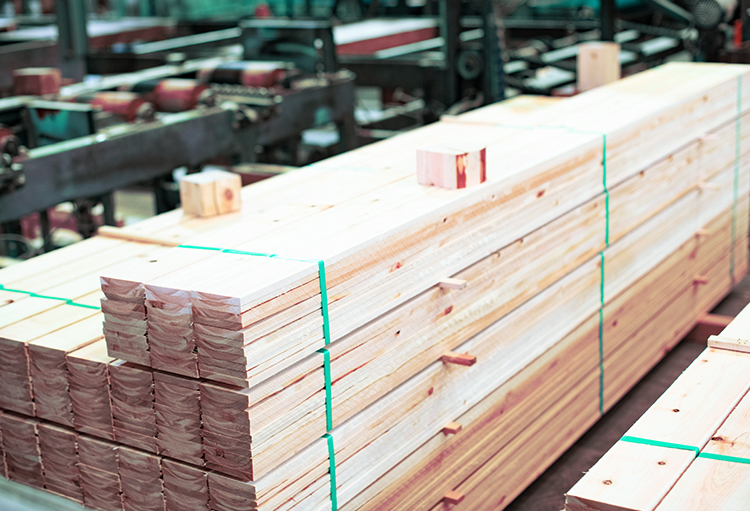
Building materials produced in these factories are numerous, including not only materials that are not visible from the outside, such as frames and foundations, but also exterior materials such as roofs, exterior walls, and rain gutters, and interior materials such as flooring materials, doors, windows and window frames, and wallpaper for ceilings and interior walls, to name but a few.
As mentioned above, these many building materials are transported to the site and assembled there. However, there is a possibility that adjacent exterior walls, for example, were not produced in the same lot. If the color quality is poor, exterior walls that are supposed to have been produced with the same color may end up looking like different colors. This is mainly due to differences in paint lots and color changes caused by oxidation. If the colors are different, it becomes necessary to match the exterior wall colors on site, and if this is discovered after assembly, there is a risk of complaints or having to redo the work during the handover inspection.
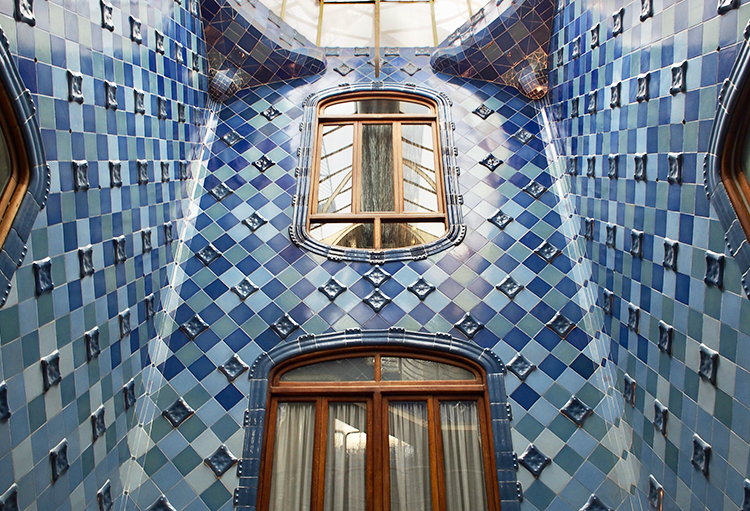
Color mismatches not only incur extra costs for correcting them, but can also damage the reputation of building and housing manufacturers. If customers have doubts about the quality, they may suspect that buildings constructed by the manufacturer will deteriorate quickly or that there may be other defects that are simply unnoticed, and these doubts could diminish the manufacturer’s brand value.
For these reasons, inspecting the color of building materials is extremely important. There are various inspection methods, including numerical management using measuring instruments. However, if the surface is coated and glossy, or has a fabric-like texture, measuring instruments may not be able to measure accurately. Therefore, it is necessary to conduct both numerical management using measuring instruments and visual inspection.
Often, however, conditions of visual inspections pose a problem. There are many cases in which accurate visual inspections are not possible because of poor lighting conditions. Since subtle color differences cannot be distinguished under high-color rendering fluorescent lamps and high-color rendering LEDs, it is necessary for inspections to have a light source with a spectrum closer to that of natural sunlight.
Artificial solar lighting is ideal for these sort of inspections!
If you only need to inspect small building materials or just a part of a large building material, the 100W series is recommended. If you need to inspect large building materials in their entirety, or if you want to inspect not only the color but also scratches and other defects, the 500W series is recommended.

Artificial Solar Lighting XELIOS-500W Series
Artificial Solar Lighting XELIOS-100W Series
If you are interested in improving the color quality of building materials, please take a look at the above URL. We have information that can help improve your company’s quality!
If you would like to conduct evaluations using a light source with a spectrum close to natural sunlight, please feel free to contact us.


