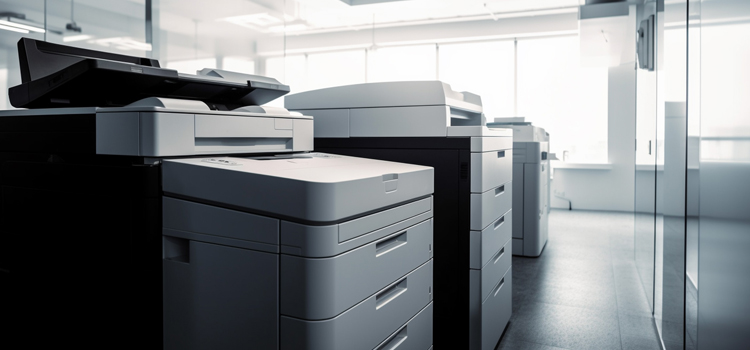
Here is a question for everyone currently viewing this page. Do you have a copier or a copier/fax multifunction machine nearby? If you do, please take a close look at the entire copier. You will notice that there are many gaps in various parts of the copier. If you look closely, you will see that it is not a sealed structure, as there are areas for maintenance, ink replacement, paper replenishment, and air intake and exhaust vents for heat dissipation.
Since many rollers are used to feed paper during printing, there are also many motors. In addition, heat is applied to quickly dry the ink printed on the paper so that the paper can be ejected. For these reasons, there are quite a few heat sources inside the copier, making it essential for them to have a structure that has sufficient ventilation.
Paper jam detection features of recent copiers and printers are well made. The LCD display provides detailed information about where the paper is jammed and also clearly shows how to remove the jammed paper. It is very helpful. But do you know how paper jams are detected? Often, optical sensors such as photocouplers are used for paper jam detection. If paper remains in a place where it should not be, the optical sensor reacts and determines it to be a paper jam. While I haven’t investigated the paper jam detection mechanisms of each manufacturer, the optical sensor detects when paper is jammed inside and displays it. A dirty sensor or debris can cause a paper jam error, stopping copying and printing even when there is no actual paper jam.
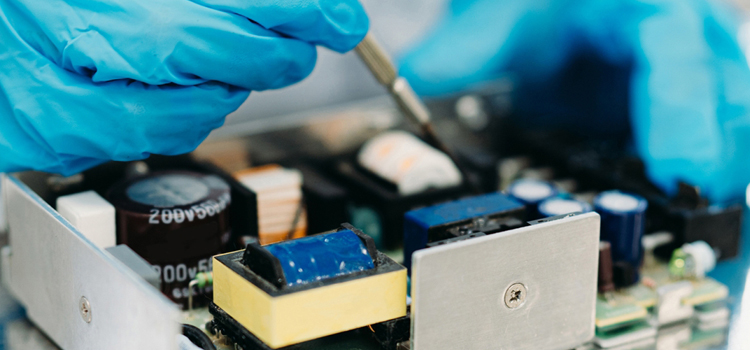
In fact, it seems that sunlight can also affect these false paper jam detections. As I mentioned at the beginning, I have heard from manufacturers that sunlight can enter through these gaps and cause the paper jam detection to malfunction. Since copiers have a very complex structure, they are designed three-dimensionally using 3D CAD. Naturally, ease of assembly and maintenance are also taken into consideration. However, one thing that cannot be known until the copier is actually built is whether sunlight entering through a gap will directly hit a sensor. Not only can sunlight entering through a gap hit a sensor directly, but it can also reach sensors via reflections from various places, making it very difficult to eliminate this possibility at the design stage.
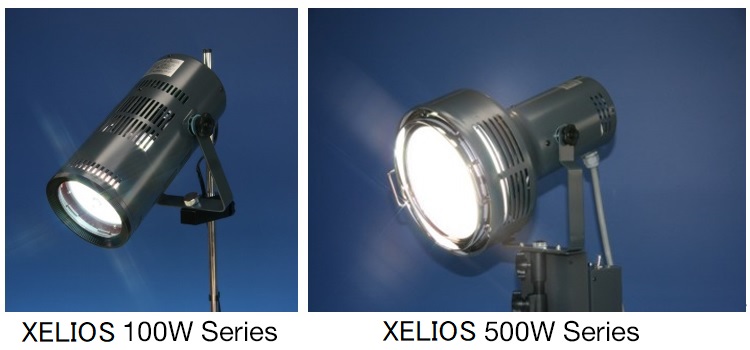
Super spotlight type artificial solar lighting is used to verify whether these sorts of possibilities have been eliminated in the design. I heard from a development engineer at a certain manufacturer that they use super spotlight type artificial solar lighting when testing prototypes or when there are complaints. The model they use is the XG-100ASS type from the 100W series. It emits light close to parallel beams, emitting only visible light with ultraviolet and infrared rays almost completely cut off. They shine the light of the super spotlight type artificial solar lighting into every gap of the copier to check the paths by which light enters the interior, thereby eliminating the possibility that sunlight could cause false paper jam detection.
If you are considering countermeasures for copier paper jam detection malfunctions, please feel free to contact our experienced team.


